Description
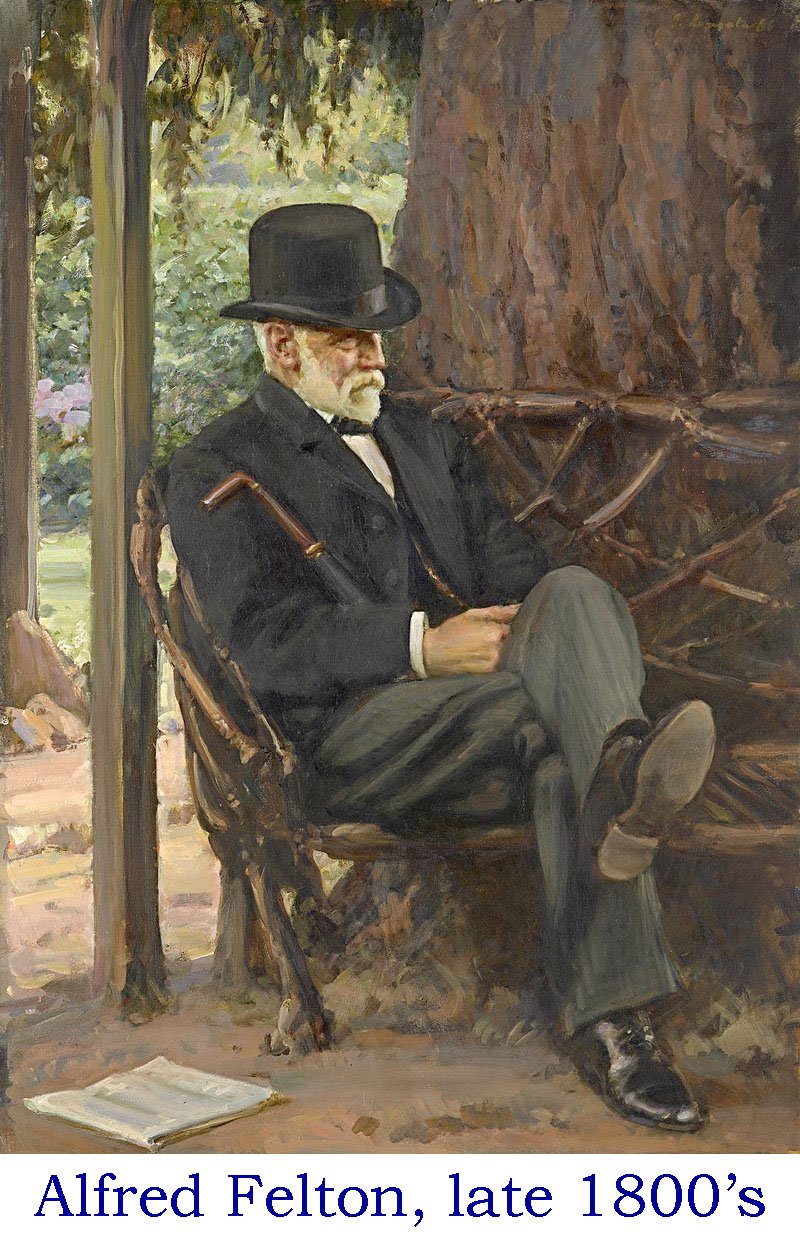
In 1947 the original watercolors were given to the National Gallery of Victoria (Australia) by the Felton Bequest, a charitable foundation by Alfred Felton, noted Australian industrialist.
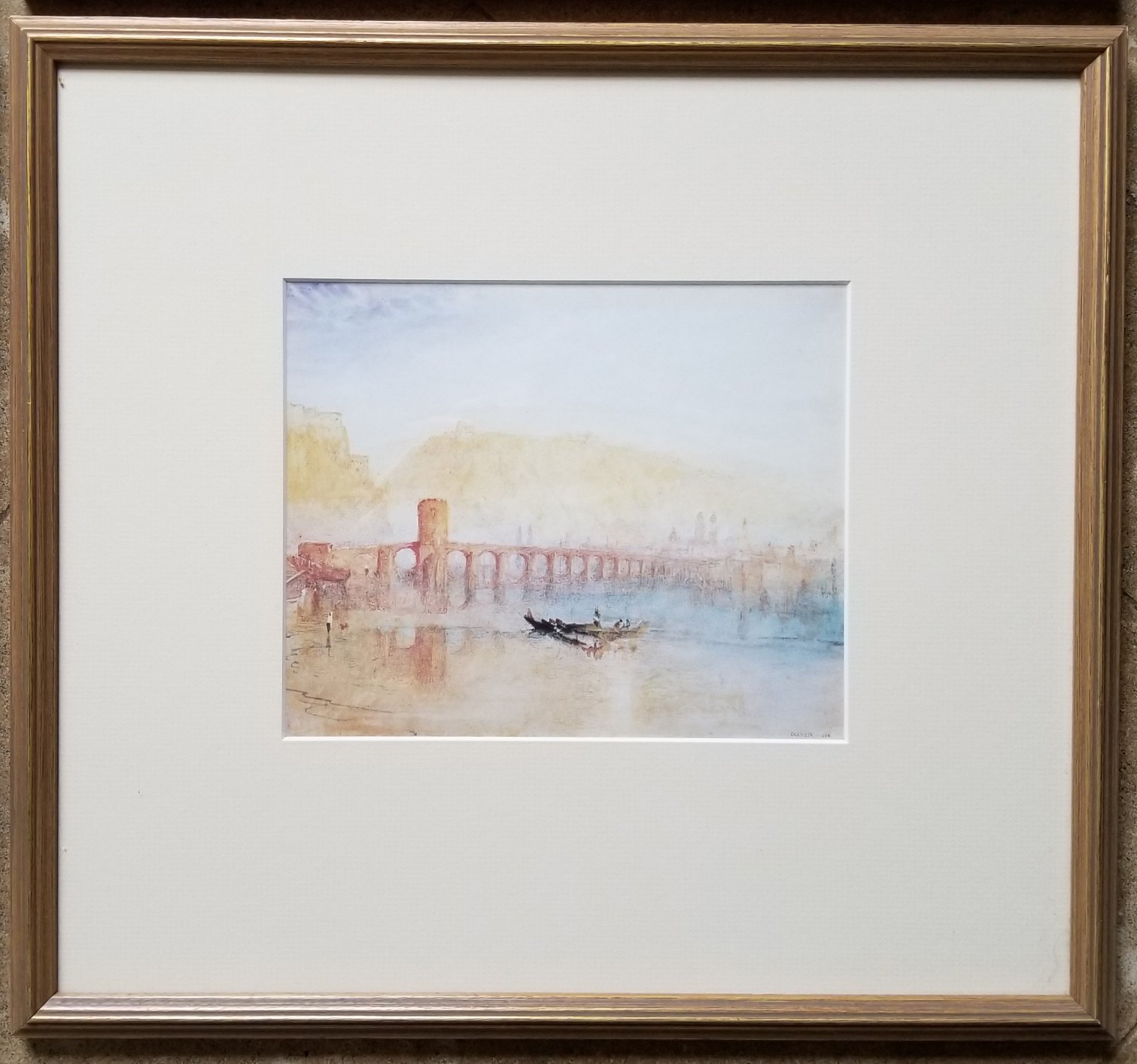
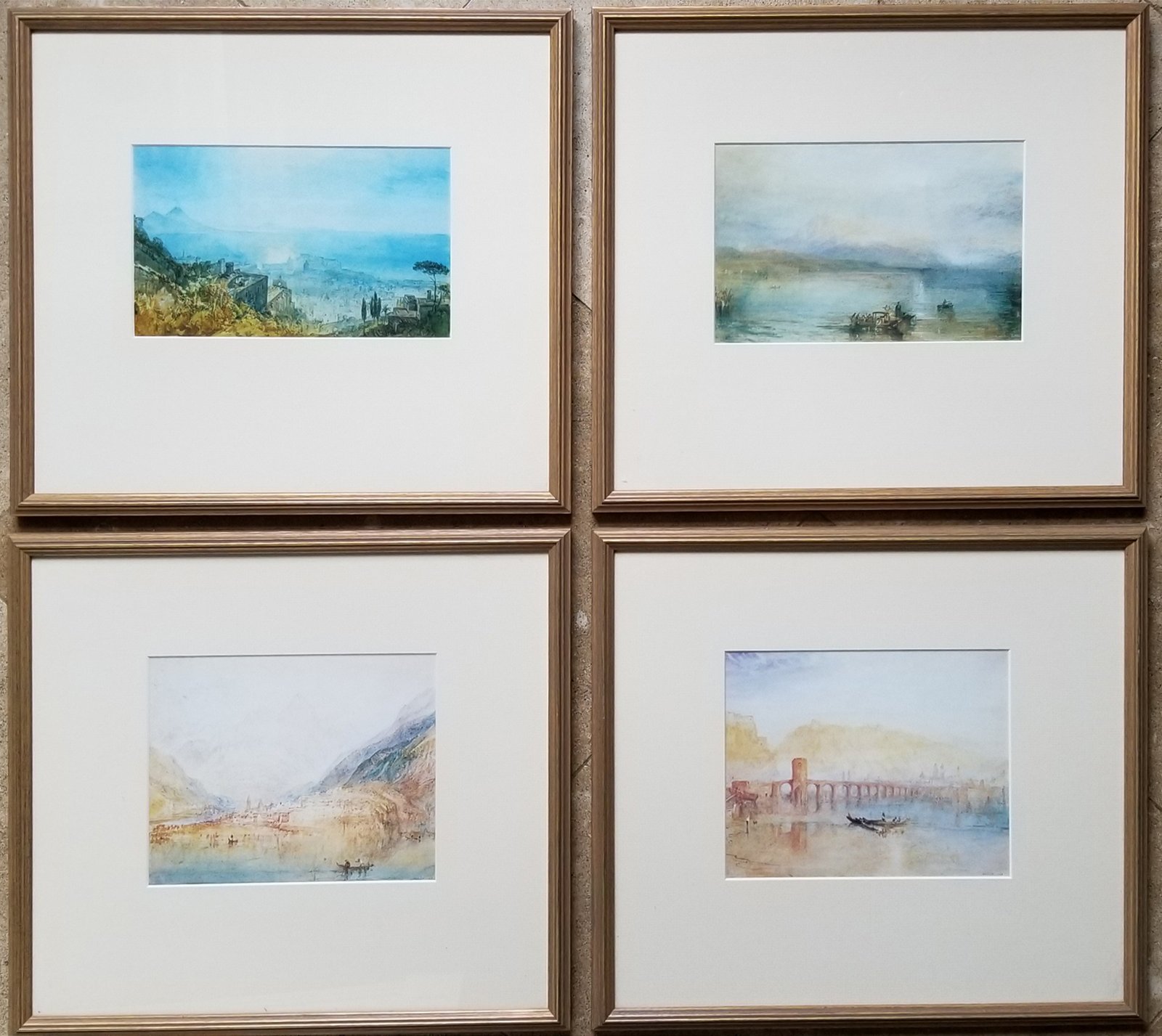
These prints and their framing are of a quality that befits the major museum they came from.
This group includes following four prints:
- Coblenz Bridge: Sample Study by William Turner
- Red Rigi by William Turner
- Brunner: Sample Study by William Turner
- Naples from Capodimonte by William Turner
On the rear are the tags from the National Gallery of Victoria.
Goldtone frames measuring 14 3/4″ long x 13 1/2″ high.
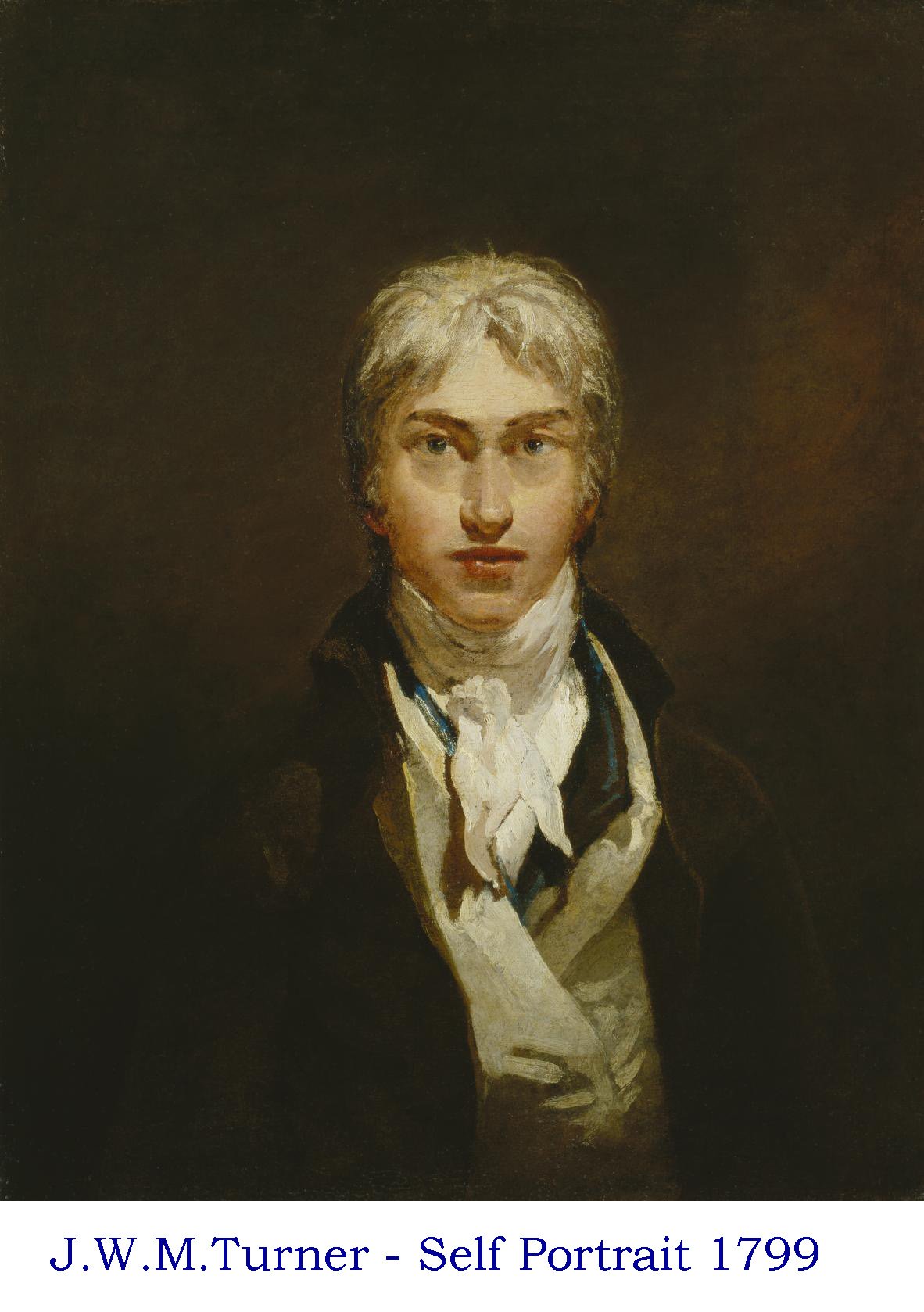
William Turner
Joseph Mallord William Turner RA (23 April 1775 – 19 December 1851), known contemporarily as William Turner,[a] was an English Romantic painter, printmaker and watercolourist. He is known for his expressive colourisations, imaginative landscapes and turbulent, often violent marine paintings.
Turner was born in Maiden Lane, Covent Garden, London, to a modest lower-middle-class family. He lived in London all his life, retaining his Cockney accent and assiduously avoiding the trappings of success and fame. A child prodigy, Turner studied at the Royal Academy of Arts from 1789, enrolling when he was 14, and exhibited his first work there at 15. During this period, he also served as an architectural draftsman. He earned a steady income from commissions and sales, which due to his troubled, contrary nature, were often begrudgingly accepted. He opened his own gallery in 1804 and became professor of perspective at the academy in 1807, where he lectured until 1828, although he was viewed as profoundly inarticulate. He traveled to Europe from 1802, typically returning with voluminous sketchbooks.
Intensely private, eccentric and reclusive, Turner was a controversial figure throughout his career. He did not marry, but fathered two daughters, Eveline (1801–1874) and Georgiana (1811–1843), by his housekeeper Sarah Danby. He became more pessimistic and morose as he got older, especially after the death of his father, after which his outlook deteriorated, his gallery fell into disrepair and neglect, and his art intensified. In 1841 Turner rowed a boat into the Thames so he could not be counted as present at any property.[1] He lived in squalor and poor health from 1845, and died in London in 1851 aged 76. Turner is buried in Saint Paul’s Cathedral, London.
He left behind more than 550 oil paintings, 2,000 watercolours, and 30,000 works on paper.[2] He had been championed by the leading English art critic John Ruskin from 1840, and is today regarded as having elevated landscape painting to an eminence rivalling history painting.
Alfred Felton
Alfred Felton was born at Maldon, Essex, England, the fifth child of six sons and three daughters of William Felton, a currier, and his wife Hannah.[1] Felton travelled to Victoria on the ship California in 1853 intending to search for gold.
In 1857, he was in business in Collins Street, Melbourne, as a commission agent and dealer in merchandise, and in 1859 was an importer and general dealer. In 1861 he was in business in Swanston Street as a wholesale druggist.
In 1867 Felton went into partnership with Frederick Sheppard Grimwade and founded Felton Grimwade and Company, “wholesale druggists and manufacturing chemists”. As the business grew over the years, the partners acquired interests in associated industries such as the Melbourne Glass Bottle Works, and Cuming Smith and Company (a fertiliser concern).
Felton also purchased two large estates, Murray Downs and Langi Kal Kal in Partnership with merchant and pastoralist Charles Gordon Campbell, a founding partner in Cuming Smith and Company. Upon Felton’s death, his share in the Estates were sold to Campbell.
Felton’s wants were few and he never married. He gave away considerable amounts to charity, and formed large collections of pictures and books which at times threatened to push him out of his rooms at the Esplanade Hotel in St Kilda, near Melbourne. He died there on 8 January 1904.[2]
In 2005, Melbourne Grammar Grimwade House opened “The Alfred Felton Hall” in honour of Felton.
Felton Bequest
Alfred Felton had no direct descendants. In his will, he established a philanthropic trust, known as the Felton Bequest.[3] The Bequest has been established to support culture and the community, with half the funding benefiting Victorian charities (particularly those that support women and children) and the other half used to acquire and donate art works to the National Gallery of Victoria.[3] After the payment of legacies and probate duties, the residue of the estate was £378,033, a huge sum, the equivalent of about A$35 million at 2000 values.[1] The Gallery selected a number of works from Felton’s personal collection for retention by it, and the remainder was sold at auction, the proceeds being added to the Bequest.[1]
Over its life, the Felton Bequest has contributed funds to many charitable purposes and projects in Victoria and has acquired numerous works of art which it has donated to the National Gallery of Victoria. The acquisition funds available to the Gallery, through the Bequest, exceed those of London’s National and Tate galleries combined.[3]
Soon after the establishment of the Felton Bequest, the October Revolution occurred in Russia. The Bolshevik government that came to power there sold a part of the collections of such museums as the Hermitage, Pushkin Museum, part of which was acquired by the Felton Bequest for the National Gallery of Victoria. The Felton Bequest has also been used to buy many masterpieces of Australian art. Since the bequest was created, more than 15,000 art works have been acquired through the Felton Bequest, the current total value of which has been estimated at more than A$2 billion.[3] These works are the core of today’s National Gallery of Victoria collection, and have made the Gallery’s collections celebrated around the world.